-
Site Explorer
- Majestic
- Summary
- Ref Domains
- Backlinks
 New
New- Lost
- Context
- Anchor Text
- Pages
- Topics
- Link Graph
- Related Sites
- Advanced Tools
- Author ExplorerBeta
- Summary
- Similar Profiles
- Profile Backlinks
- Attributions
- Compare
-
Link Tools
- My Majestic
- Recent Activity
- Reports
- Campaigns
- Verified Domains
- OpenApps
- API Keys
- Keywords
- N-grams Near Links
- Keyword Checker
- Search Explorer
- Link Tools
- Bulk Backlinks
- Neighbourhood Checker
- Submit URLs
- Experimental
- Index Merger
- Link Profile Fight
- Mutual Links
- Solo Links
- PDF Report
- Typo Domain
- TLD Checker New
- Free SEO Tools
- Support


Expand your content ideation and keyword research beyond Google
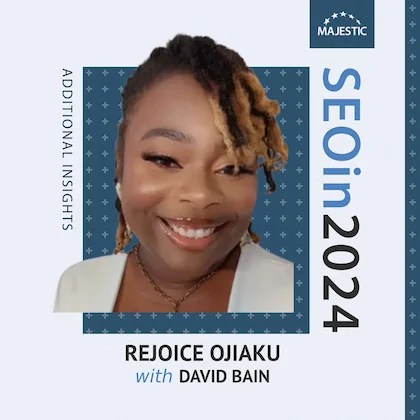
Rejoice Ojiaku
Rejoice Ojiaku recommends expanding research beyond Google to social platforms like TikTok to analyze trends and using AI to generate new content ideas, adapting strategies as search evolves.
More Additional Insights



Rejoice says: “I'm doing this by tapping into SEO and social media, for example. That would be my additional insight.
I think it's important that we find where our users begin their search. A lot of times it does start on social platforms. Once we tap into that, we're able to expand our content ideation process, and our keyword research process, beyond this. We are able to find our users and find topics exactly where they begin.”
You’re not talking about social media SEO, you're talking about utilising social media to discover new content opportunities to publish on your website, right?
“Absolutely. Doing so helps repurpose content, or make that process easier, because we're actually tapping into more updated real data when it comes to content ideation and keyword research.
Moving away from beginning our keyword research from the Google search engine and actually starting it from social media, we can expand our strategy to include different topics that are trending, that users are actually talking about.”
How are people actively beginning their searches on social media now? Is it just the youngsters that are doing that?
“Nowadays, everyone is starting their searches on social media. Let's say you visit a new city, you visit a new place, or you want to go on a holiday, for example, and you just want to know what you can do in that new place. Before, people would probably Google, ‘top things to do in Greece’, but now the most common platform people now start with is TikTok.
People will now search, ‘things to do in Greece’ on TikTok. Because you now have actual user-generated content there and you can see other keywords that are flowing and returning you the actual responses.
Everyone now starts their search from social platforms and then you start expanding deeper and going into Google to continue your search. Originally, I think everyone now kicks it off on a social media platform. I know I do, I know my sister does, my friends do as well, and other experts I've spoken to.”
Is the manner in which people conduct that initial search on a platform like TikTok, quite different to Google? Also, as a market researcher, how do you determine what people are actually searching on social media?
“On TikTok, for example, it kind of acts the same way as it does on Google, in terms of when it serves you the results. When I go in and start typing on the search function within TikTok, I'm still presented with suggested searches that other people may have searched for, and sometimes they do have additional key terms.
For example, if I want to type ‘things to do’, it might give me popular locations that people have searched within the suggested searches on TikTok, be it London, New York, or America. Then, once you keep on typing, you have more suggested searches – such as ‘things to do in London during the summer’ or ‘during the winter’. Now you're adding more modifiers into that search.
I think that process is really, really effective because I can now understand from a keyword perspective where my searches are, and it makes that clustering a bit easier. What TikTok does, for example, is just add extra caveats to each search so you can actually see the breadth of those searches.
You even have the TikTok creator analytics platform now, where it tells you the most trending searches and the most popular searches. Everyone has access to looking into that data. From an SEO perspective, as SEO experts, that platform makes keyword research, content ideation, and the whole process just a bit easier because you are able to tap into what users are searching in real-time, at the moment. What's commonly trending and how does that apply to your business?”
Can you quite easily export or extract the data from TikTok into your preferred analysis platform?
“I'm not too sure if you can export it. Within the analytics platform, you can look at the breadth of keyword research. It wouldn't act the same way as other tools that we know, like the Ahrefs or Majestic, where you can export the full data of whatever you want to find.
However, I do think it is a great starting point to understand the search query and understand the topics or the trending topics. It’s a great platform to also look at what type of content works well with that keyword. Are people doing more creative videos? Are they doing more long videos or short-form videos? Are they doing more voiceovers? Are we seeing more point-of-view videos or UGC being created?
It gives us a bit more insight into actual everyday users as opposed to businesses. I do feel that, with normal keyword research, we are able to see the intent in terms of what that software is telling us. But on TikTok or social media, we know the intent because we can see the type of content being served back once we do those searches.”
Can we get keyword volume as well?
“Keyword volume is not necessarily visible. How it works is that the main searches will appear at the top. They come up first and they will be the ones that are more trending. On the TikTok analytics platform, it does tell you what's trending and what's not, and it does place it into an order.
We can use that as SEOs. We can gather all those searches and look at it from the perspective of search functionality on Google. We can input these key terms, for example, and use this to complement our traditional strategy.
How I would do it, and how I have done it, is I go through TikTok, social media – social listening. I look at the hashtags, look at trending topics, and then type that into a software tool that can give me more overarching topics. For example, a keyword magic tool where I can input one key term and get a whole phrase of different related terms that are very similar.
That's how you can use both to complement your keyword research instead of sitting there thinking, ‘What other key terms are applicable? What other keywords do people search for?’ Social media gives us that. All we have to do is look at the information we're getting and then see how that translates, from an organic perspective, onto other platforms that we're using for keyword research.
It's a brainstorming buddy. It complements how we traditionally look at keyword research. The extra step is that, from keyword research, it can be quite difficult to understand what content suits this type of keyword phrase. We can test that out by seeing what we've seen on social platforms, and what kind of content does come up.
People always feel like it should turn into a blog, but a blog is not the only content form that we can serve to users. Social media shows us what's performing really, really well to get to the point. These videos satisfy user intent, or satisfy the user query, much faster because it's more direct.”
Can AI tools also have access to this TikTok information, or is it necessary to jump in there as an individual and do the work yourself?
“AI can't actually access your TikTok account, I don't know if there's an API for that as of yet, but I do think there is a way for you to utilise AI, social media, and SEO and create a powerhouse for you.
Ideally, the process will start by looking to build on your keyword research because you want to generate content ideation from that. I would start with social media. I would go and look at the trending topics around your niche, see what comes up, utilise Google, utilise Instagram, utilise X (formerly known as Twitter), and consider, ‘This is what users are talking about in relation to what I want to do.’
Take those topics that you're seeing, put them into a keyword research tool that you use, and that will at least pull up more keywords that might be related. You can do that on Google’s Keyword Planner, SEMrush, and all of those things.
Once you've built that keyword research because of the topics you found on social media, I would then go into AI and cluster. I'll ask ChatGPT to cluster these keywords into overarching topics and ask it to create subtopics from that. Then you can go a step further and ask AI to help you think about the best content format for this key term, because the clustering should also include the intent, so it understands what kind of content we're looking for.
Once it serves you the type of content you want to see, go and test that. Test that to see if that content does come up – if that keyword does produce that sort of content on search engines and on social platforms. See if there's a variation. Because then what you're doing is you're creating shareable content and content that you can repurpose. Not content that can only sit on the site, but content that we can actually utilise, especially topics we can utilise to create blogs, to create infographics, to create videos, and so on.
That's a good strategy to utilise all of those 3 to make sure that they work cohesively, and they help you produce the results that you want to see.”
Are you saying that AI is only as good as the data that you feed it to begin with?
“Absolutely. What AI can't possibly see is what's coming up on TikTok when you actually search. It can't actually know the content that's coming up on these social platforms.
It's really, really good to allow it to generate a cluster of these terms, generate some ideas in terms of content format, and then test them out to see if it's true. That's the best way to utilise it. With AI, everything's about feeding it data. Feed it as much data and as much information as needed, even when you're writing your prompts. Give it as much context as is needed in order to get the best results out of that.”
In terms of user journeys, do you find that users are starting with social media and then moving on to Google, or are a lot of users just using social media for the whole purchase decision-making process?
“Recently, people have used social media for the whole journey. Social media serves me awareness content, it serves me consideration content (especially when I'm just trying to decide between 2 options), and now, on Instagram, Facebook, and TikTok, you can buy, because they have shops there. Brands do have their shops there and it's linked nicely to your payment platform.
Social media has beautifully allowed users to stay on the platform. Everything you can do, you can do on there. It's really, really key to then understand – if you're an e-commerce brand or a business owner, and you have a shop on social media as well as your actual site – how are you utilising that to drive sales, to drive traffic, and to drive conversions all the way through?
If I'm looking to buy a particular product, I will first go on social media to go to the brand’s social media and see what they say about the product. I will then go and find other people's reviews, because now social platforms allow us to read reviews from people testing the products, using the products, and so on.
What's beautiful about that is that, in those reviews (especially on TikTok), they link the products so, whilst they're talking, I could easily click it. If I'm happy with that, I can purchase it whilst I’m watching that video. That is a seamless journey as a user.
Business owners have to figure out the best way to drive sales on social media and drive sales on your actual website. You can do that by, obviously, adding links, including different optimisation on social platforms, putting your website in your bio, making sure that you're always doing CTAs and telling users, ‘If you like this product, click the link below!’, or whatever the case may be.
Understanding that the user journey sometimes starts and ends on social platforms is such a great insight for SEO because now we have to figure out, ‘If that's the case, how do we then make sure that the same is true for the website? What is happening on social media? What kind of content are people actually tapping into that's getting the conversions? And how can we do that on our website, to make sure we're driving people to the purchase page or the checkout page?”
What's something that SEO shouldn't be doing in 2024?
“I think it's counterproductive to solely rely on traditional search engine data because even Google and other search engines are now understanding the power of social platforms. Now, even in the SERPs, we have the carousels and we're actually seeing TikTok videos coming up within those carousels.
We need to move away from solely relying on traditional search engines and think differently because the industry is changing. We are being introduced to new tools, new software, and new ideas. We have to adapt to those – especially when we look at content ideation and keyword discovery.
If we stick to the traditional way, we are overlooking dynamic content opportunities that may arise, and will most likely arise from social media or other platforms. Once we shift our focus to include insights from these platforms, SEO experts can tap into the wealth of real-time data, and that real-time data reflects the user interest and will reflect the real-time conversations that are happening. Thereby, we can create more relevant, engaging content, which is essentially what Google wants us to do, especially with the March 2024 Core Update about high-quality content.
We're doing this because we're not relying solely on the traditional search engine data that we are so used to.”
Rejoice Ojiaku is SEO Manager at Nelson Bostock UNLIMITED, and you can find her over at NelsonBostock.com.
Also with Rejoice Ojiaku
Majestic SEO Podcast
|
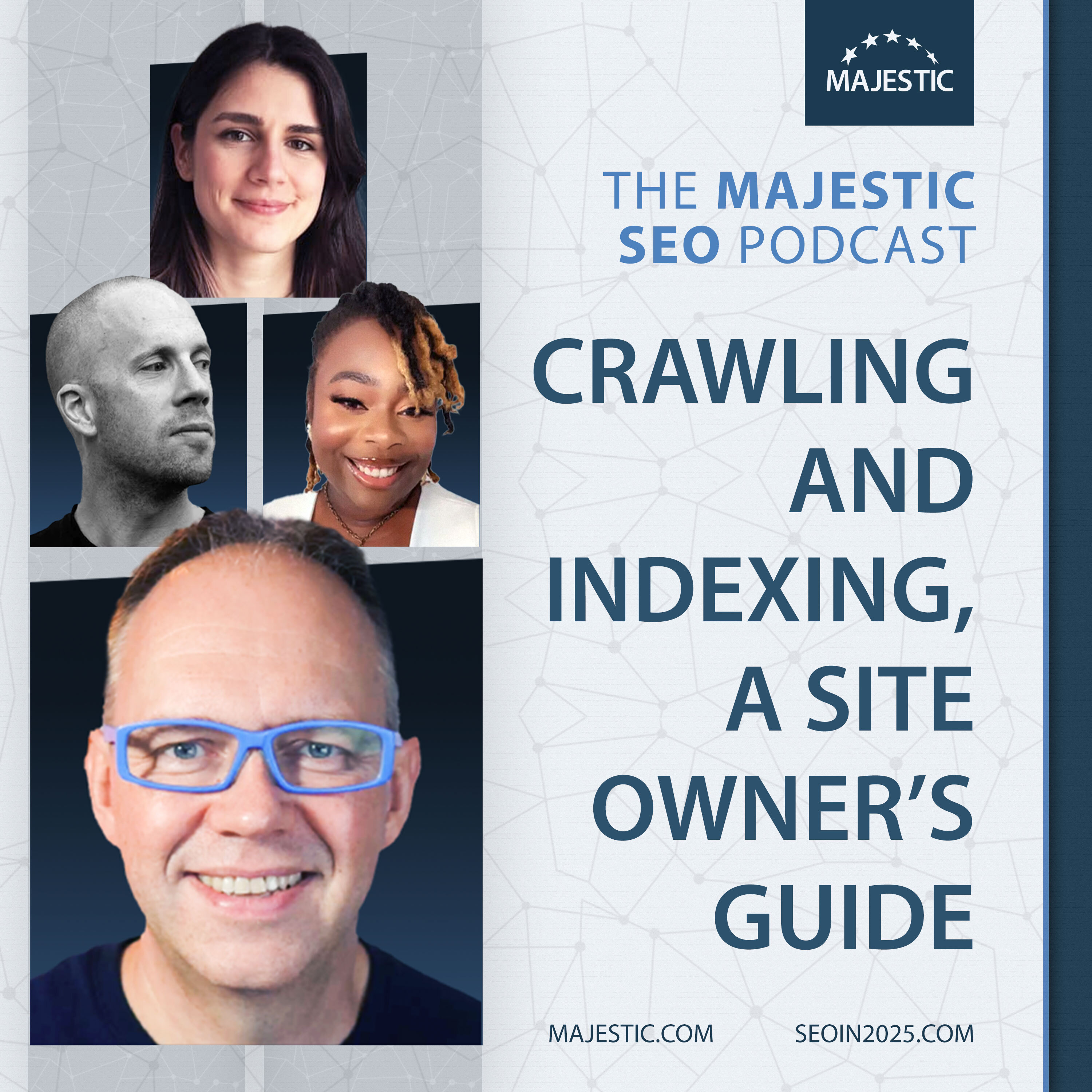
Joining David Bain to talk about optimising your website for crawlers will be Charlie Williams, Rejoice Ojiaku, and Miruna Hadu.
|
SEO in 2025
|
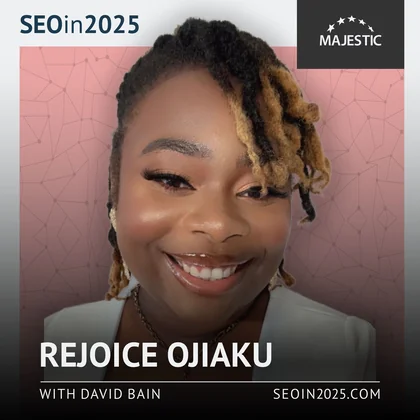
In a world increasingly overpopulated with labels, Rejoice Ojiaku from Nelson Bostock UNLIMITED suggests brand archetypes as a way to make your identity cohesive and compelling to the customers that matter. |
Majestic SEO Podcast
|
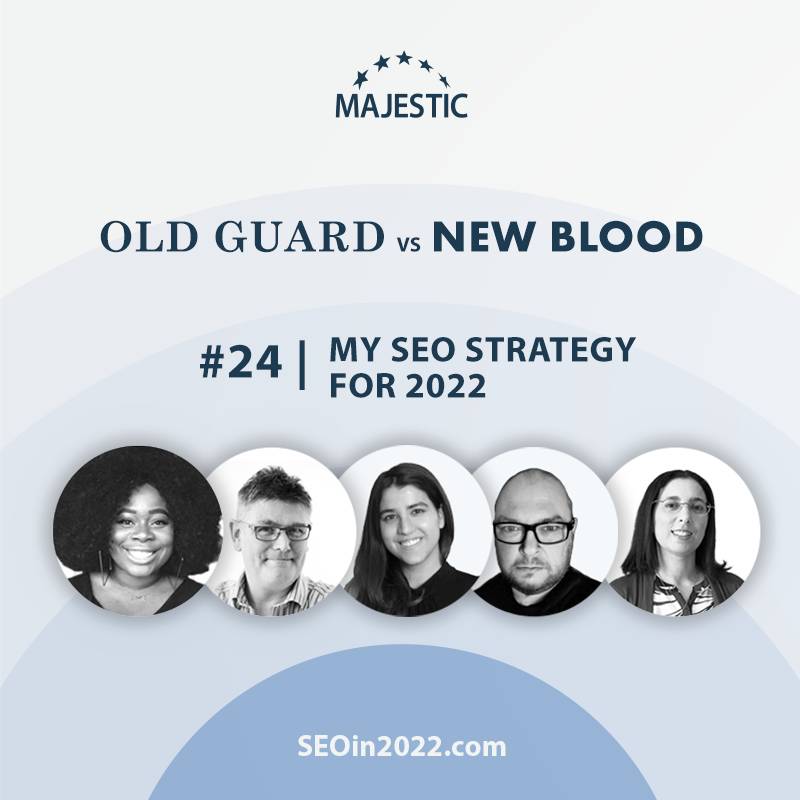
It’s time to plan out your activities for the coming year! But what should you include and what should you prioritise in 2022?
|
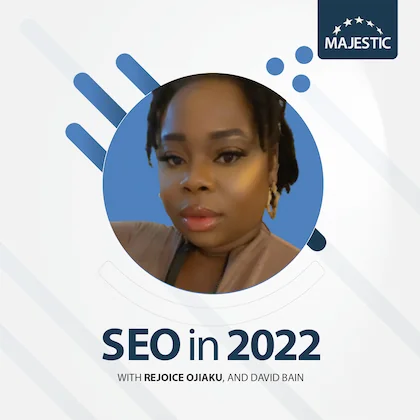
SEO in 2022
|
Rejoice highlights that you don't have to be completely original with the content that you produce. |
Choose Your Own Learning Style
 Video
Video
If you like to get up-close with your favourite SEO experts, these one-to-one interviews might just be for you.
Watch all of our episodes, FREE, on our dedicated SEO in 2024: Additional Insights playlist.
 Podcast
Maybe you are more of a listener than a watcher, or prefer to learn while you commute.
SEO in 2024: Additional Insights is available now via all the usual podcast platforms
 SEO in 2024
Catch up on SEO tips from 101 SEO experts in the original SEO in 2024 series
Available as a video series, podcast, and a book.
Fresh Index

Unique URLs crawled
194,188,717,434
Unique URLs found
618,052,412,077
Date range
07 Apr 2026 to 05 Aug 2026
Last updated
47 minutes ago
Historic Index
Unique URLs crawled
4,502,566,935,407
Unique URLs found
21,743,308,221,308
Date range
06 Jun 2006 to 26 Mar 2024
Last updated
03 May 2024
